

TABLE OF CONTENTS
WHAT IS REVERSE OSMOSIS (RO) WATER FILTRATION?
HOW DOES REVERSE OSMOSIS (RO) WATER FILTRATION WORK?
- Multiple Phases of Filtration
- All Filters Are Not Created Equal
- Pressure Is Key to Performance
- RO Water Filtration System Options
- What Happens to Contaminants Filtered Out in the RO Process
- Look for the WaterSense® Label
- When to Replace Filters
DELTAFAUCET.COM: WATER QUALITY RESOURCES
Reverse osmosis systems are considered the gold standard in drinking water filtration, and this guide helps you understand why. With information and insights from the reverse osmosis experts at Delta Faucet Company, you'll find out what reverse osmosis is and how it works to deliver cleaner water. You'll also learn about various factors to consider when purchasing a reverse osmosis water filtration system for your home.
WHAT IS REVERSE OSMOSIS?
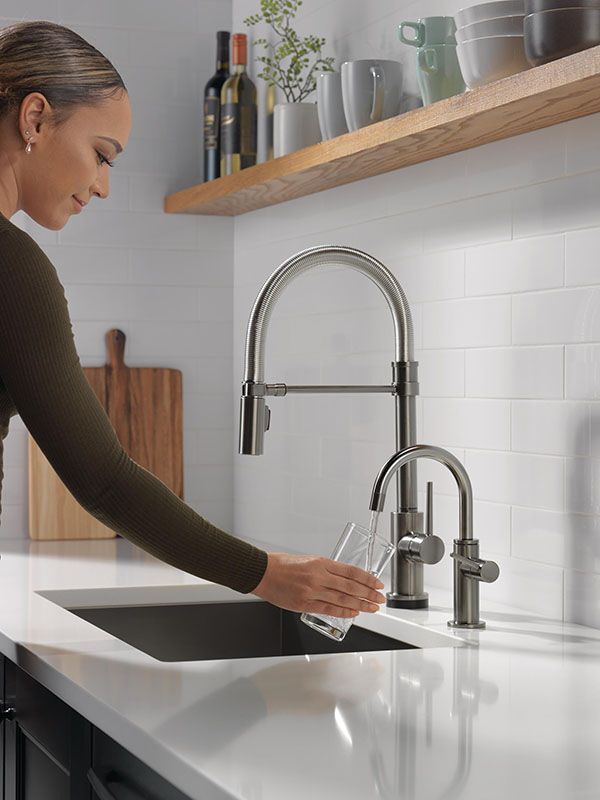
Reverse osmosis (commonly known as RO) is a highly effective water purification process that dramatically reduces contaminants in drinking water. RO systems use high pressure to push drinking water through a semi-permeable membrane, screening out contaminants at the molecular level. The membrane allows small water molecules to pass through, while larger contaminant particles (e.g., microplastics) and molecules (e.g., lead, arsenic, and PFAS) are blocked and removed.
Comprehensive Filtration
Although the reverse osmosis membrane is the key component in the filtration process, RO systems include other types of filters as well, such as carbon filters that reduce chlorine, volatile organic compounds (VOCs), and pesticides in the water. The combination of several filtration methods creates a comprehensive, best-in-class filtration system that provides cleaner water for drinking, making beverages, rinsing produce, and cooking.
HOW DOES REVERSE OSMOSIS (RO) WATER FILTRATION WORK?
Reverse osmosis water filtration systems are connected to the cold-water supply or manually filled with water (see "RO Water Filtration System Options" below) and include several, complementary filtration methods.
Multiple Phases of Water Filtration
Although various reverse osmosis systems vary, the filtration process typically includes at least three phases of filtration to purify the water (See performance data sheet for details):
- A sediment filter reduces large particles, such as rust and sand. This step helps prevent clogging of the system.
- A carbon filter protects the RO membrane by reducing chlorine and also reduces other substances that impact taste and odor. These filters act like a sponge, absorbing harmful organic chemicals in the water.
- An RO membrane reduces inorganic compounds (e.g., asbestos and lead), cysts, particles, and total dissolved solids (TDS) that carbon filters are unable to absorb. These semi-permeable membranes may also reduce synthetic chemicals, including PFAS (also known as "forever chemicals"), and other contaminants.
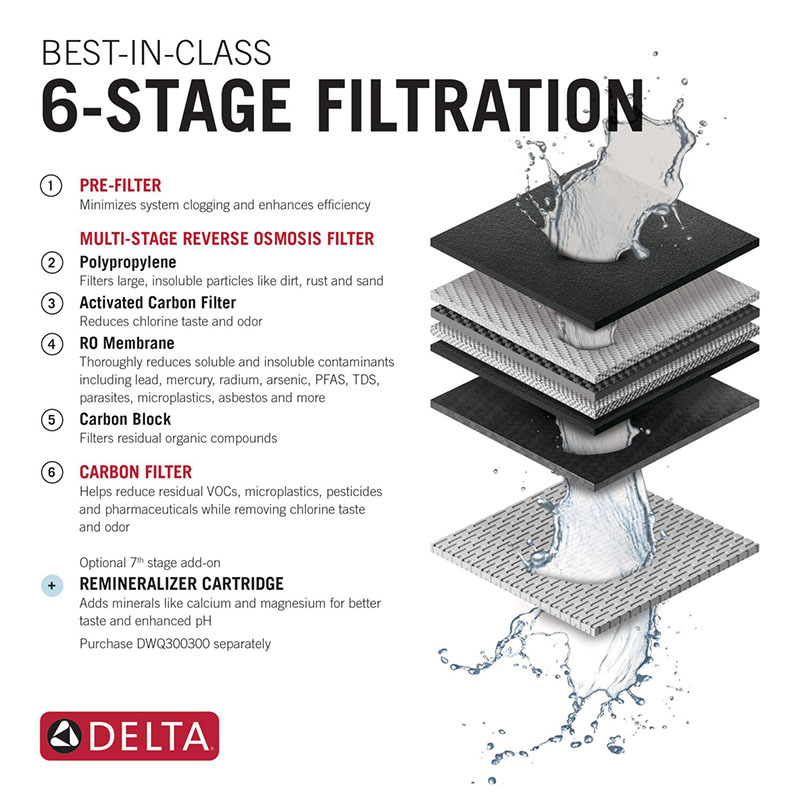
After water passes through the RO membrane, high-end RO filtration systems may include additional filtration stages to reduce more contaminants. For example, the Delta® Clarifi™ Reverse Osmosis System includes an advanced carbon filter tailored to reduce VOCs and other organic chemicals. RO systems may also offer remineralization cartridges to add back minerals (e.g., calcium and magnesium) that impact the taste and pH of RO filtered water.
The Delta® Clarifi™ Tankless Reverse Osmosis Water Filtration System provides six stages of filtration, plus a remineralization option. Learn how the Clarifi RO System filters out 90+ contaminants from drinking water.
All Filters Are Not Created Equal
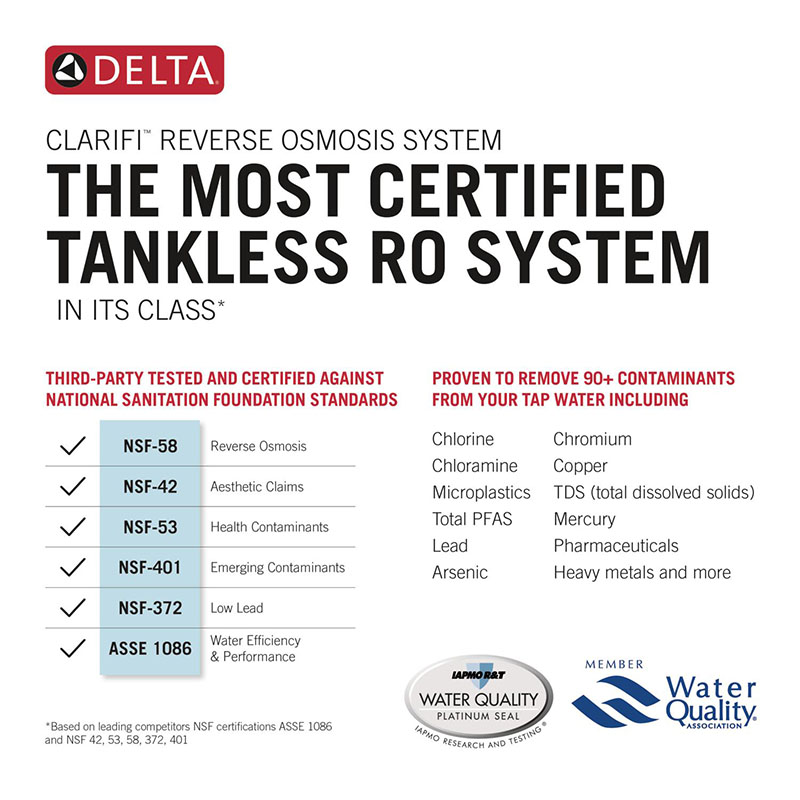
From an inexpensive sedan to a luxury sports car, car performance can vary dramatically. The same holds true for filtration systems. Filters are tailored to reduce specific compounds from drinking water—from a basic, aesthetic filter that reduces chlorine to a more advanced, high-performance filter that reduces VOCs, pesticides, pharmaceuticals, and PFAS. That's why it's important to find out which contaminants the filter or filtration system actually reduces in your drinking water.
Although price may be an indicator of quality, look for third-party certification to National Sanitation Foundation (NSF) standards by a reputable organization (e.g., IAPMO R&T Water Quality Platinum Seal, WQA Gold Seal, or NSF certification). Filtration products can be certified to reduce one or more contaminants for each NSF standard, so be sure to check the performance data sheet to see the complete list for each model you're considering.
Pressure Is Key to Performance
The performance of an reverse osmosis system depends on pressure in the system. Systems with a tank typically rely on the water pressure in the home, although some may also include a booster pump. In a tankless system, a pump provides the pressure required to push water through the semi-permeable RO membrane. The pump may make some noise while it's operating, but it also speeds up the production of filtered water through the system and improves efficiency (i.e., reduces waste water).
RO Water Filtration System Options
Several different reverse osmosis filtration systems are available, and they vary broadly in terms of initial cost, ease of installation, and ongoing maintenance. RO filtration systems will need periodic filter replacement, and many systems also require regular maintenance (e.g., draining and sanitizing). Be sure to check the manufacturer's maintenance and installation information for details before you purchase.
Whole-home systems can filter all of the water coming into the home. Although these systems are typically more complex to install, have a higher upfront cost, and produce more waste water, they can deliver filtered water wherever you want it. However, they are not usually compatible with brass or copper plumbing infrastructure.
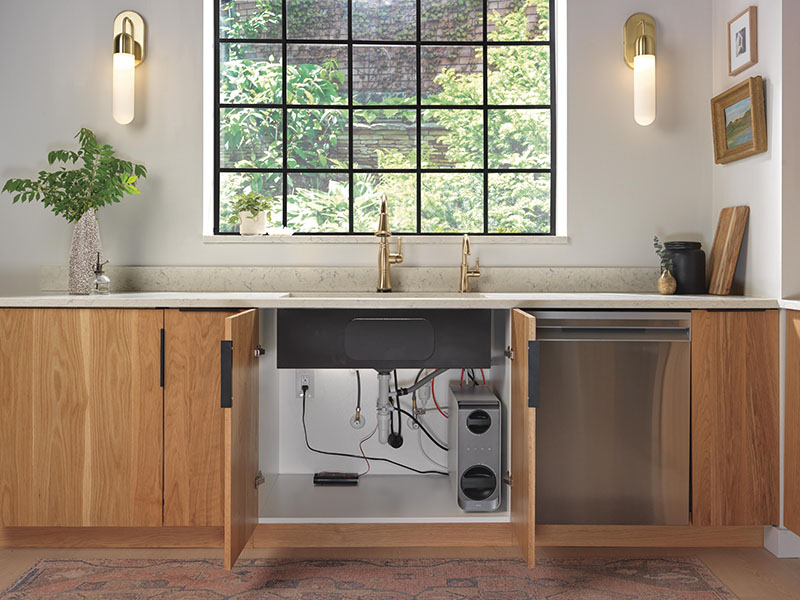
Under-counter systems connect to a beverage faucet and/or a refrigerator water dispenser to dispense filtered water. A separate beverage faucet makes it easy to fill large pitchers and other containers.
Some under-counter units come with a storage tank to hold filtered water. Once depleted, the system will require time to refill before more filtered water is available. Tankless under-counter models take up less space under the sink and filter water on demand. Although models with a tank are typically less expensive, the tank will require periodic purging, sanitization, and maintenance—a process that can be time-consuming but is necessary to ensure the water remains fresh.
Countertop units sit on the counter and have a dispenser or include a pitcher to hold filtered water. Most countertop systems are manually filled with water, although some models can be connected to a faucet.
What Happens to Contaminants Filtered Out in the Reverse Osmosis Process
The contaminants filtered out by the reverse osmosis process are captured in waste water (also known as reject water, concentrate, or brine) that must be removed from the system. Although some models (e.g., countertop units) must be manually drained, many RO filtration systems automatically purge waste water during the filtration process. The Clarifi Tankless RO Filtration System also self-flushes after each use and every 12 hours of non-use to prevent stagnation.
When researching reverse osmosis filtration solutions, pay attention to the filtered-to-waste water ratio, which indicates how efficient the system is. High-efficiency tankless systems will have a 2:1 or 3:1 ratio, meaning that for every 2-3 gallons of clean, filtered water produced only 1 gallon of water is rejected. Tanked RO systems typically have ratios in the 1:2 to 1:4 range, producing 2-4 gallons of waste water for every gallon of filtered water. Be sure to look closely at reported efficiency ratios to understand the data being shared. Some manufacturers may provide the ratio in the opposite format—waste water to filtered water. Also note that some manufacturers may report a recovery rating, a technical term that isn't representative of real-life use with tanked systems.
Look for the WaterSense® Label
To ensure you're purchasing an efficient point-of-use reverse osmosis filtration system (e.g., a tankless under-counter model), look for products that have earned the EPA's WaterSense label. WaterSense labeled models produce 2.3 gallons of waste water or less to deliver 1 gallon of filtered water. To earn the WaterSense label, RO filtration products must also meet standards for filtration performance, hard water tolerance, and accurate labeling. According to the EPA, "a WaterSense labeled model can reduce water use by more than 3,100 gallons of water per year on average—or 47,000 gallons of water over the system's lifetime—compared to the water use of a typical point-of-use RO system."
When to Replace Reverse Osmosis Water Filters
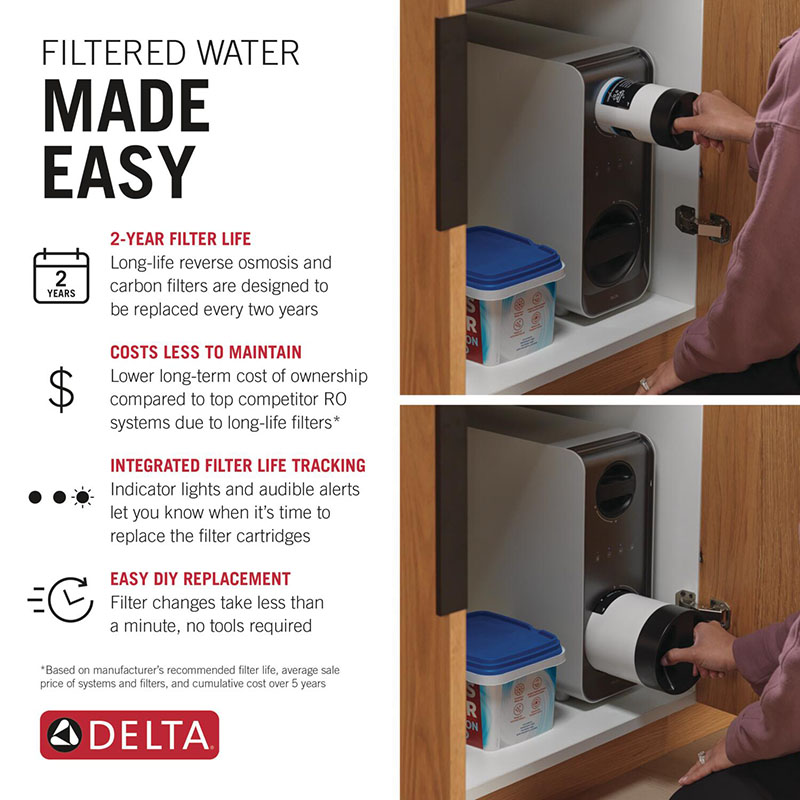
Some manufacturers recommend filter replacement at certain time intervals, such as every six months. Unfortunately, this recommendation doesn't take individual usage into consideration. You might change your filter before you need to or long after it stopped effectively filtering your water.
Models that incorporate user-based tracking measure the amount of water that actually flows through the filtration system. These models typically use an indicator light, audible sound, or another notification method to let users know when the filter(s) should be replaced.
Keep in mind that most reverse osmosis filtration systems have more than one type of filter to replace (e.g., sediment, carbon, and RO filters). Depending on the manufacturer, the filters may be designed to be replaced at the same time for easy maintenance or at different intervals.
DELTAFAUCET.COM: WATER QUALITY RESOURCES
Want more information? Take a look at additional water quality resources on deltafaucet.com:
- Use our Water Quality Tool to check your local water quality
- Find out about water filtration in general, including the benefits of filtration and why certification to industry standards is important
- Learn more about the Delta® Clarifi™ Tankless Reverse Osmosis Water Filtration System—certified to filter out more than 90 contaminants from your drinking water
- View coordinating Delta RO beverage faucets
- Get the scoop on the Delta Clarifi Shower Filter Attachment—an instant upgrade for your skin and hair
You can rely on Delta Faucet to deliver best-in-class water filtration products for your home.
Related stories.
Impactful Innovation
7 Times You'll Wish You Had a Pot Filler
Impactful Innovation
HydroRain and Other Luxurious Splurges for the Bath
Impactful Innovation
New Year’s Wish List for Making Your Home Smarter