

Key Takeaways
- Do shower head filters work? Shower filters are designed to reduce chlorine and other impurities in shower water. For independently verified chlorine reduction, look for products certified to NSF/ANSI 177.
- Shower water filters are typically easy to install. Inline shower filters attach between the shower arm and your existing shower head, while filtered showerheads replace the existing shower head. Always check the manufacturer’s installation instructions and compatibility requirements.
- How long does a shower filter last? Many shower filters are rated for about 6 months or 10,000 gallons, but how often you should change a shower filter depends on water quality, shower flow rate, number of users, and shower frequency and duration.
There’s more coming through your shower head than just water. Depending on your water supply, chlorine and other impurities can make their way into the shower, too. That’s where a shower water filter comes in. Here’s how shower filters work, what they can reduce and what to know about installing and changing one.
How Shower Water Filters Work
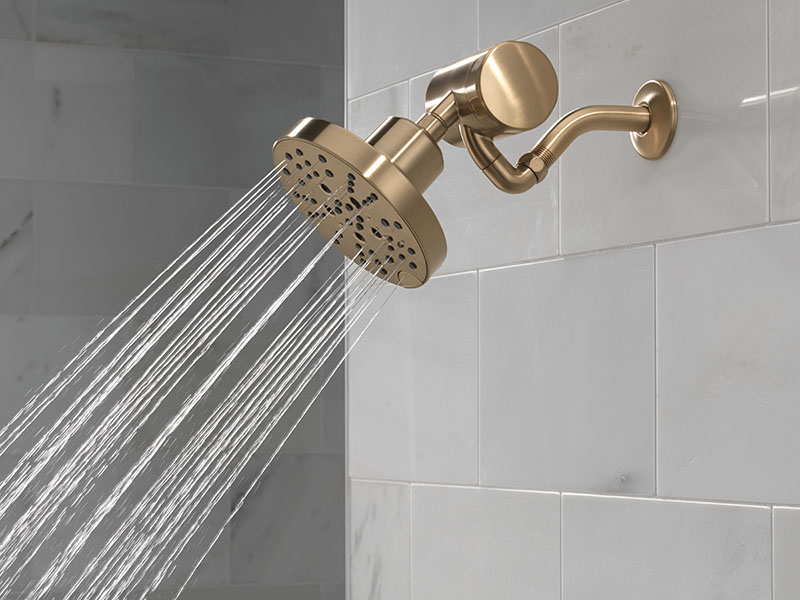
Shower water filter systems typically use two key elements: 1) a screen that prevents large pieces of sediment from clogging the filter and 2) one or more filters that reduce impurities in the water.
Depending on the manufacturer, model, and contaminants targeted for reduction, the filtration cartridge will include a specific type of media (e.g., KDF® or activated carbon) or a blend of various elements to achieve the desired results (e.g., KDF and calcium sulfite).
How to Know What a Shower Filter Reduces
Although reputable manufacturers provide information about what contaminants their filter(s) is designed to reduce, you should also look for third-party certification to industry standards.
The relevant standard for shower filtration is NSF-177, which ensures that the model reduces chlorine. Certified products are required to publish a “Performance Data Sheet” that specifies the contaminants reduced. Check for details on product marketing materials, specification sheets, and/or installation instructions.
Is There Chlorine in Shower Water?
In the U.S., most people get water from a municipal water-supply utility. These utilities treat the water to ensure that it’s safe to drink before distribution to homes and commercial spaces. Thanks to its ability to disinfect, chlorine is often added to the water supply to kill bacteria, viruses, and other microorganisms that may be harmful to human health.
A shower filter designed and tested for chlorine reduction can reduce the amount of chlorine in the water at the shower.
Filtered Showerheads vs Inline Shower Filters
Shower filters are designed to reduce chemicals and contaminants in shower water before the water reaches your body. Unlike whole-house water filtration systems, they’re installed at the point of use, so you can place them in specific locations—the primary bath, for example.
There are two main options for shower filters: 1) a separate, inline filter attachment and 2) a water filter that’s integrated into the showerhead (often called filtered showerheads).
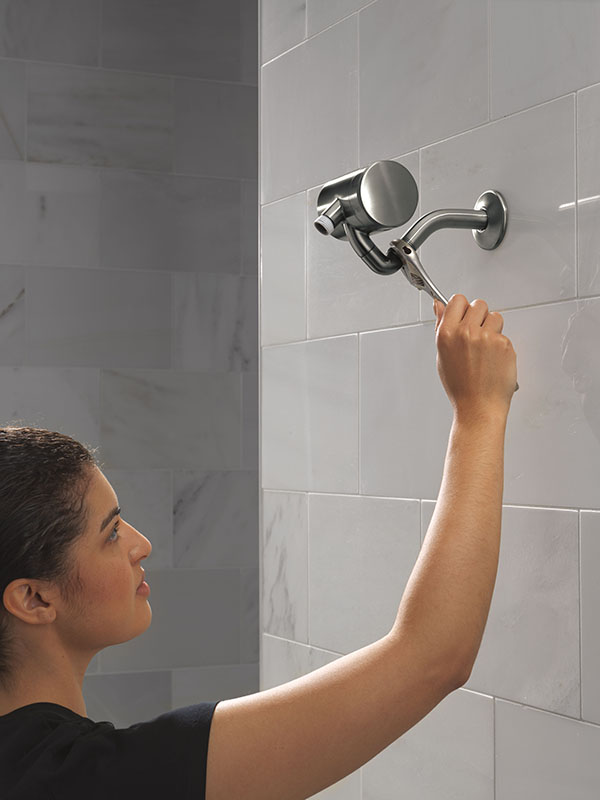
Inline shower water filter attachments are typically designed to work with your existing shower device, so you can always have your preferred shower head. You simply install the shower filter between your existing shower head and the shower arm.
Always refer to the installation instructions for your specific model to ensure compatibility with your existing shower device. For example, the Delta® Clarifi™ Shower Filter Attachment is compatible with most shower heads, hand showers, and 2-in-1 combos.
Integrated shower water filters (or filtered showerheads) are built into the shower head or hand shower itself, so they replace your existing shower device. Although the streamlined design of integrated filters for shower heads may be appealing, keep in mind that an all-in-one design limits your shower head options. Additionally, some models may make filter replacement more complex and time consuming.
Comparing Shower Water Filters
A quick online search for a “shower filter” returns a variety of options across a broad range of price points. So, how do you choose? As you research your shower water filter options, keep these things in mind.
What to look for in a shower water filter
| Consideration | Why it matters | What to check |
|---|---|---|
| Third-party certification | Certification gives you added confidence that chlorine-reduction claims have been independently verified. | If chlorine reduction is a priority, look for certification to NSF/ANSI 177. |
| Overall appearance | A filter can change the look of your shower, especially if it is visible behind the shower head. | See whether the filter is concealed, integrated into the shower head, or clearly visible. |
| Shower head height | Some filters lower the shower head, which may affect comfort and clearance. | Check how the filter changes the shower head position. Some models lower it, while others raise it slightly. |
| Available finishes | A coordinating finish can help the filter look like a thoughtful part of the shower instead of an add-on. | Look for a finish that complements the shower arm, controls, and other fixtures. |
| Filter lifespan | Replacement frequency affects the long-term cost and convenience of ownership. | Compare the recommended lifespan, replacement filter price and any multipack savings. Six months or 10,000 gallons may be common, but models vary. |
| Replacement availability | Even a well-designed filter is less useful if replacement cartridges are hard to find. | Confirm that replacements are available directly from the manufacturer or through trusted online and in-store retailers. |
| Ease of replacement | Filter changes can range from a simple cartridge swap to removing the entire shower head. | Review the instructions, filter location, required tools and available how-to videos before buying. |
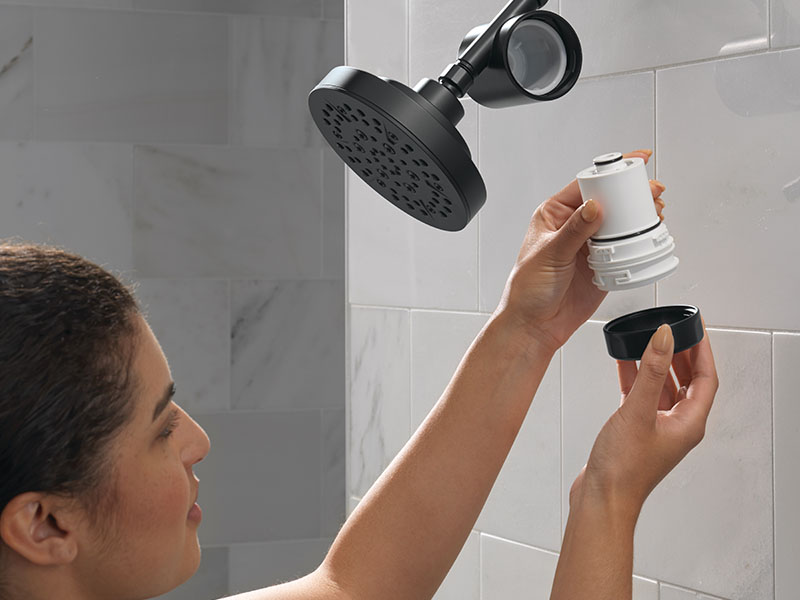
How Long Does a Shower Water Filter Last?
Many shower filters state a filter lifespan of 6 months or 10,000 gallons of water. Keep in mind that the lifespan will vary depending on key factors, including:
- Shower usage in your home
- Quality of your water, such as chlorine and pH levels.
- The number of users: how often they shower, the length of their showers
- Shower flow rate
When thinking about how often to change your shower filter, consider these two common scenarios:
Primary Shower: This household’s two adults shower daily for 15 minutes each and have a 1.75 gpm shower head, so they’re using 52.5 gallons of shower water each day.
Teens’ Shower: This household’s two teenagers shower daily for 20 minutes each and have a 1.75 gpm shower head for a total of 70 gallons of shower water each day.
A filter with a 10,000-gallon lifespan needs to be replaced in about 6 months (10,000 gal./52.5 gal. per day/30 days per month) for the Primary Shower but less than 5 months for the Teens’ Shower.
Some manufacturers provide useful tools to help you know when to replace your shower water filter, based on specific usage. They may also provide reminders to ensure you replace your filter at the appropriate time. By following product guidelines and taking into account your home’s usage, you’ll know when you need to change the shower filter.
When choosing a shower water filter, consider what it is certified to reduce, how it installs, how frequently the filter needs replacement, and whether replacement cartridges are readily available. Explore Delta® Clarifi™ Shower Filters to find an option compatible with your shower setup
Note: KDF is a registered trademark of KDFFT/Kymera International.
Related stories.
Impactful Innovation
7 Times You'll Wish You Had a Pot Filler
Impactful Innovation
HydroRain and Other Luxurious Splurges for the Bath
Impactful Innovation
New Year’s Wish List for Making Your Home Smarter