

Key Takeaways
- Clean acrylic tubs and showers with mild, non-abrasive cleaners, and always use a soft cloth or sponge
- Cleaner that's safe for acrylic isn't automatically safe for the surrounding faucet, trim, or accessories
- If you seal your tub, skip silicone or acrylic latex sealant - use these recommended polymer sealants instead to avoid leaks
When it comes to how to clean an acrylic tub or shower, there is a right way and a wrong way. Acrylic, which is a durable type of plastic commonly used for tubs and shower walls, needs a slightly different cleaning approach than tile or porcelain.
Using the proper cleaning supplies and non-abrasive cloths will keep your tub or shower looking new for a long time. However, if you use caustic cleaners or scratchy materials, you could do permanent damage. Here is our best advice for keeping your acrylic shower or tub clean and in mint condition.
1. Choose the best cleaners for acrylic tubs
We recommend that you clean your acrylic bathing product made of Delta ProCrylic or Acrylic with Innovex Technology with non-abrasive soaps and cleaners, such as:
- Dishwashing detergent
- Power Bathroom Cleaner
- CLR® Bath & Kitchen® Cleaner
- Formula 409® All-Purpose Cleaner
- Iron Out® Rust Stain Remover
To clean an acrylic tub without scratching the surface, always use a terry cloth towel, soft cloth or sponge. Don’t use abrasive scrubbing pads, steel wool or sponges, as they can cause permanent damage to the acrylic material. If you use a drain cleaner or clog remover, be sure to rinse thoroughly with water so no product is left standing near the drain.
Keep in mind that a cleaner that is safe for your acrylic tub or shower may not be safe for the surrounding faucet, trim, door frame, or accessories. Always check those surfaces separately.
For more info on safe cleaning, check out our guide on cleaning and maintaining your faucet and shower head. If you have a glass shower door, you’ll want to know the right way to clean shower door glass.

2. Cleaners to avoid
Some chemicals and cleaners may deteriorate acrylic surfaces, causing cracks and, potentially, property damage. To avoid this, don’t use cleaning products that state on their label that they are not suitable for use on acrylic, ABS, polystyrene or plastic.
Be sure to check the label of any product before you apply it to the surface; it’s easier to avoid damage than to try to remedy it.
Chemicals we do not recommend using to clean acrylic showers/tubs:
- Solvents (turpentine, lacquer thinner, mineral spirits, paint thinner, MEK (Methyl Ethyl Ketone, also known as Butanone), xylene, acetone, naphtha, etc.)
- Simple Green® All-Purpose Cleaner
- Pine-Sol® Original
- Scrubbing Bubbles® Cleaner
- Tilex® Bathroom Cleaner
- The Works® Tub & Shower Cleaner
- Lysol® with Hydrogen Peroxide Multi-Purpose Cleaner
- Windex® Vinegar Multi-Surface Cleaner
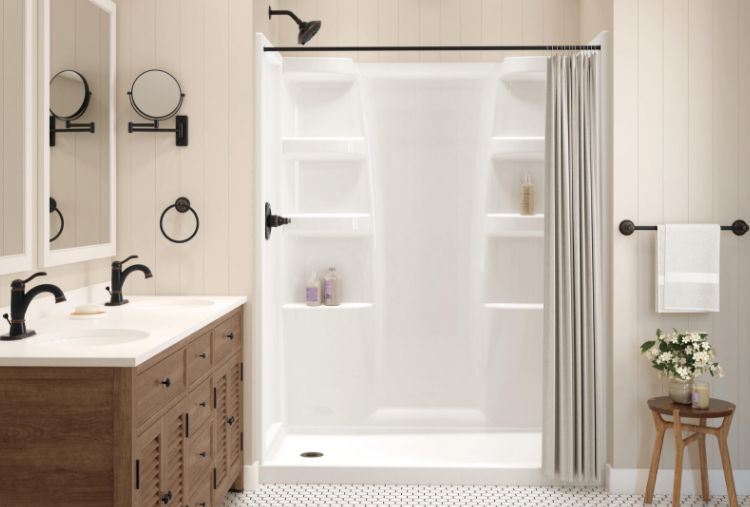
3. Seal your tub to prevent future damage
We don’t recommend that you use silicone and acrylic latex sealant because of potential adhesion and shrinkage, which could lead to leaks. To get the best results, use an advanced kitchen and bath polymer sealant, such as:
- 3.0™ Kitchen, Bath & Plumbing High Performance Sealant
- Red Devil® RD3000™ Advanced Kitchen & Bath Sealant
- ECO-BOND® Kitchen-Bath-Plumbing Adhesive and Sealant
Sealant Application Tips
When you’re ready to apply sealant, a little planning goes a long way. Pick up some painter’s tape and use it to mask off the seam to help make clean-up easier. When you’re applying the bead, use a constant, steady speed to avoid an uneven finish. Use a caulk tool or a plastic spoon to work the sealant into the joint. Follow the directions on the back of the tube for cure time.
After you’re finished applying, clean up the product surface and remove any excess sealant with denatured alcohol. Don’t use solvents (turpentine, lacquer thinner, mineral spirits, paint thinner, MEK, xylene, acetone, naphtha, etc.) that can wreak havoc on an acrylic surface.
With a little care and consideration, you can prevent damage to your acrylic shower or tub. Keep a supply of soft cloths handy and remove any damaging products or abrasive scrubbing items from the bathroom to ensure they aren’t used.
For more on keeping the rest of your shower in shape, check out our guide on how to clean a shower head.
Frequently Asked Questions
What cleaners are safe for acrylic tubs and showers?
Products like Formula 409 and dishwashing detergent (such as Dawn dish soap) are both on Delta's approved list for acrylic surfaces, along with several other non-abrasive cleaners listed above. Always check the label before trying something new, since even a mild-looking cleaner can cause damage if it's not rated for certain materials.
Can I clean an acrylic tub or shower with vinegar?
Yes, vinegar is generally considered safe for acrylic surfaces. A diluted mix of vinegar and warm water can help soften mineral deposits and hard water stains. Let it sit for a few minutes before wiping clean with a soft cloth.
Safety Note: Be sure not to mix vinegar with other cleaning products like bleach, since combining chemicals can create toxic fumes.
How often should I clean an acrylic tub or shower?
A daily wipe-down with a soft cloth or squeegee is a good habit that helps prevent soap scum and water spots from forming. For a deeper clean, aim for a thorough scrub once a month if you're keeping up with daily wipe-downs, or every two weeks if quick cleanings aren't part of your routine.
Related stories.
Home Improvement 101
How to Replace a Kitchen Faucet
Home Improvement 101
How to Replace a Two-Handle Faucet

Home Improvement 101
5 Smart Things to Do While Showering