

Key Takeaways
- Shower filters can reduce chlorine and other impurities in shower water, helping limit exposure to substances that may contribute to dry skin and hair.
- Not all shower filters remove the same impurities. Look for third-party verified reduction claims based on the specific substances found in your local water.
- Shower filters generally do not soften hard water, since water hardness is caused by dissolved minerals that typically require an ion-exchange water softener.
- Knowing what’s in your water can help you choose the right filtration solution. Check the Consumer Confidence Report or use the Delta® Water Quality Tool to better understand local water quality.
It’s common knowledge that contaminants in drinking water may impact how it tastes, and some harmful substances (e.g., high levels of lead in drinking water) can negatively impact human health.
But do you have to drink water to have it affect your body?
If you’ve spent much time in the pool, your answer is likely to be “no” because of one important chemical: chlorine.
What Is Chlorine?
Chlorine is a chemical often used as a disinfectant in cleaning solutions (e.g., bleach) and for water purification, killing harmful bacteria, viruses, and other microorganisms that can make people sick. Although chlorine is useful to keep pool water safe and clean for swimming, it may have a drying effect on skin and hair. That’s why it’s important to rinse off before and after you spend time in the pool.
Chlorine is also commonly used in municipal water supplies to keep the water safe for consumption. The Environmental Protection Agency (EPA) sets limits on harmful contaminants in drinking water and implements protocols for water quality testing, treatment, and monitoring that local water treatment facilities must follow.
These guidelines help keep chlorine and other regulated substances in the water within levels the EPA considers acceptable for drinking water.
How Chlorine Impacts Your Skin and Hair
Some research suggests that long-term exposure to chlorinated water may contribute to dry skin and hair.
Do Shower Filters Reduce Chlorine?
Yes. Shower filters typically reduce chlorine and other impurities (depending on the filter) from your shower water before it contacts you.
Types of Filters
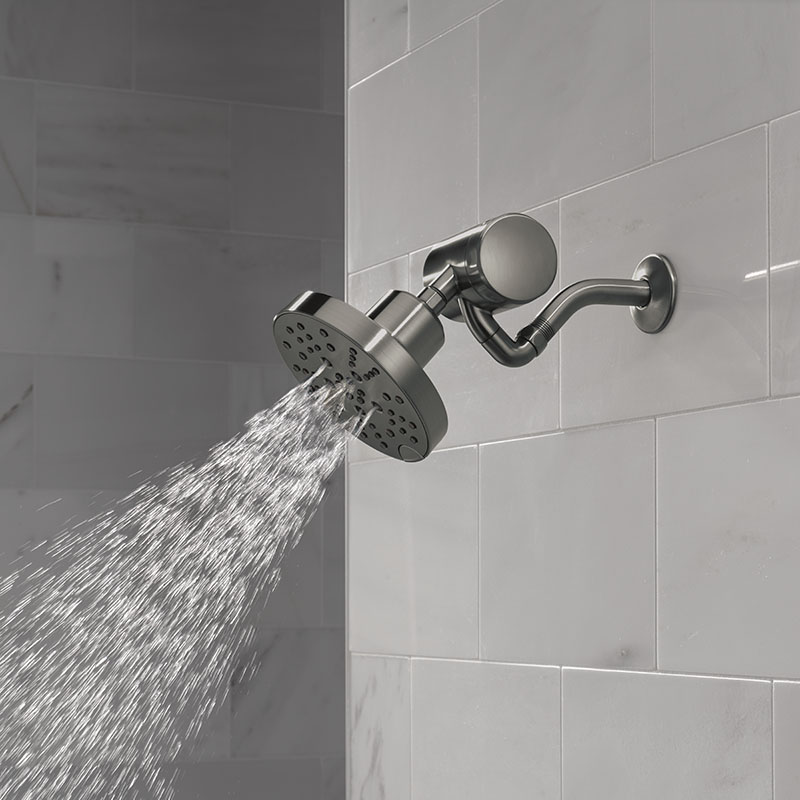
H2Okinetic® 5-Setting Contemporary Raincan Shower Head w/ Clarifi™ filter
Shower water filters come in two designs: filters that are built into a shower head and filters that attach between your existing shower head and water supply.
A shower head water filter, sometimes called a filtered shower head, combines filtration and the shower head in one product.
If you already like your shower head, an inline shower water filter lets you add filtration without replacing it. This type of shower filter attaches between the shower head and water supply, making it a simple option for upgrading your existing setup.
See How Shower Water Filters Work to help you narrow down the best option for your bathroom.
Do Dermatologists Recommend Shower Water Filters?
A Delta Faucet Company survey of 150 board-certified dermatologists found that a majority of dermatologists believe that less chlorine in your shower water is good for your hair. 83% of those surveyed recommend using a shower filter like the Clarifi™ Shower Filter Attachment, which was specifically designed to reduce chlorine in shower water. It’s a simple solution that’s easy to install and maintain.
Delta® Clarifi™ is an inline shower water filter.
Other Impurities in Shower Water
Some geographic locations have elevated levels of calcium and other minerals in the water that isn’t filtered out by municipal water treatment and can cause limescale buildup on fixtures. Water may also pick up bits of sediment, such as sand, in the pipes as it flows to your faucet or shower, and some water sources (e.g., wells) have high levels of iron that may discolor shower walls and fixtures.
Even if these impurities aren’t harmful, they can be annoying and make it more difficult to clean and maintain your fixtures.
Not all shower water filters reduce the same substances. If you’re concerned about specific impurities in your water, look for a filter with third-party verified reduction claims for those substances. Which begs the question, what’s your local water quality like?
Check Your Water Quality
Despite the safety protocols in place, many people have concerns about the quality of water coming into their homes. To learn more about the water quality in your area, view the Consumer Confidence Report (CCR) for your water utility on the EPA’s website. This helpful document provides information about the local water source, water treatment, and contaminants found in the water.
You can also use the Delta® Water Quality Tool, which lists contaminant levels by zip code and highlights those that exceed Environmental Working Group (EWG) health guidelines, which are more stringent than the EPA’s standards.
Ready to see what a water filter for your shower head can do? Get tips for choosing the right one with How Do Shower Filters Work?
Frequently Asked Questions
Does a shower water filter work for hard water?
Most shower water filters aren't designed to soften hard water. Hard water is caused primarily by dissolved minerals such as calcium and magnesium, which require specific water-treatment technology to reduce.
Can a shower head filter soften water?
No. Water softening happens with ion exchange rather than a physical filter. Your best bet for softening water in your shower is a whole-home water softener system.
Related stories.

Impactful Innovation
7 Times You'll Wish You Had a Pot Filler
Impactful Innovation
HydroRain and Other Luxurious Splurges for the Bath
Impactful Innovation
New Year’s Wish List for Making Your Home Smarter